In high-level Mythic+ environments, particularly within Legion Remix where damage output is exponentially increased by Infinite Power, maximizing efficiency on trash pulls is often the true measure of a group’s success. It is no longer enough to simply “pull big and burn”; the spatial relationship between the tanks, DPS, and the environment—what we call Dungeon Trash Geometry Awareness—is the critical factor determining whether area-of-effect (AoE) damage is maximized or completely wasted.
This article delves into the tactical positioning necessary for perfect cleave coverage, illustrating how understanding enemy collision boxes, line-of-sight (LOS) breaking potential, and terrain elevation is the difference between an efficient timed run and a chaotic wipe.

The Principle of Maximum Cleave Coverage
In most WoW rotations, AoE damage is centered around the player or a specific target. For classes utilizing conical, frontal, or radial cleave mechanics (such as certain Monk, Warrior, or Demon Hunter abilities), poor positioning means that enemies can be left outside the damage zone even if they appear visually close. Maximum Cleave Coverage requires the tank to position the trash in such a way that the DPS can stand in the optimal zone to hit every enemy simultaneously.
This often involves using a corner or wall to compress the enemy pack, ensuring all enemies are within the smallest possible footprint. A scattered pull, even if manageable, guarantees reduced damage efficiency and increases the risk of stragglers escaping AoE slows.
Understanding Enemy Collision Boxes and Clustering
Every enemy has a defined collision box, which determines how tightly they can be stacked. Tanks must master the art of “soft stacking” and “hard stacking.”
- Hard Stacking: Used against enemies with small collision boxes (e.g., small spiders, non-elite humanoids). The goal is to place the entire stack directly on the tank’s feet, allowing radial AoE to hit all targets.
- Soft Stacking: Necessary for large enemies (e.g., big demons, constructs) whose sheer size prevents them from occupying the same space. Here, the tank must pull the enemies into a tight crescent shape along a wall. This crescent allows the DPS to stand in the center and hit every enemy with frontal cones or wider radial blasts without having to reposition.
Failing to account for these geometry rules means frontal cleave abilities will often hit only 3 out of 5 targets, wasting precious milliseconds of the group’s accelerated power cycle.
Using Terrain Elevation and Line-of-Sight
Dungeon geometry isn’t just about walls; it’s about verticality. In dungeons like Neltharion’s Lair or Black Rook Hold, using elevation changes can dramatically alter AoE effectiveness. When a tank pulls enemies slightly below the main platform, certain ground-based AoE effects (like Death and Decay or certain Shaman totems) may not reach the entire pack.
Conversely, LOS Pulls are crucial for bringing ranged casters into melee cleave range. By rounding a corner, the tank forces the ranged mobs to walk into the group, ensuring they are compressed into the optimal AoE geometry instead of standing 40 yards away demanding single-target interrupts.
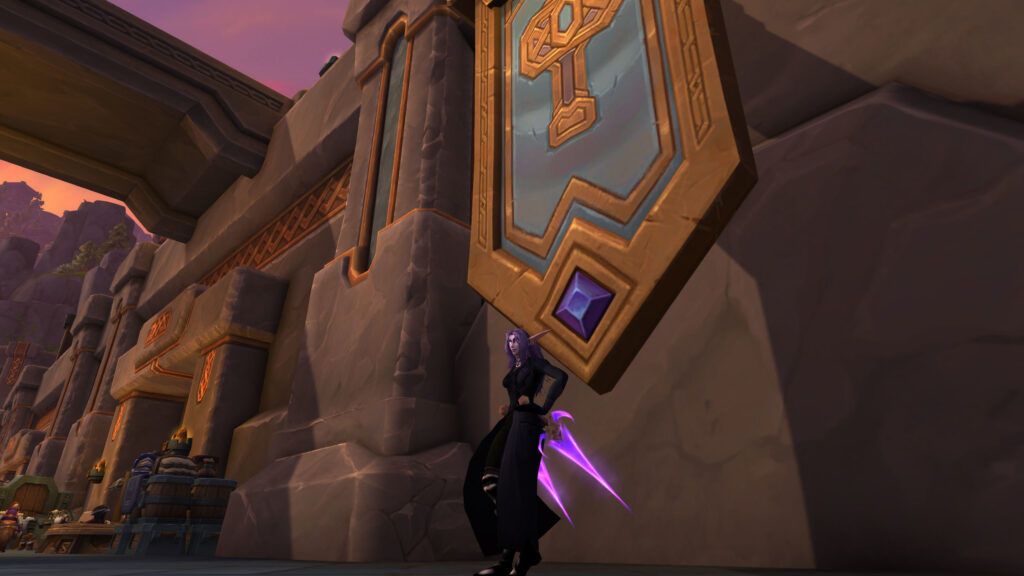
The best teams identify “AoE Hotspots” — areas in the dungeon known for perfect stacking angles, allowing all DPS to utilize their full rotation without adjustment.
Tank and DPS Synchronization
Geometry awareness is a shared responsibility. The tank must communicate their stacking plan (e.g., “stacking on the right pillar”) so that the DPS can pre-position themselves for the perfect damage window. DPS must also avoid using movement abilities (like Disengage or Shimmer) that might inadvertently pull them out of the optimal cleave geometry.
A classic failure of geometry awareness occurs when a tank, after rounding a corner to LOS a pull, immediately backs up into open space, scattering the compressed enemies and turning a tight stack into a wide arc, thereby crippling the effectiveness of most cleave abilities.
Furthermore, tanks must recognize when certain enemy types require specific spacing due to AoE mechanics (like exploding pools or fear radii), ensuring the *safe* cleave geometry is maintained. This is the advanced application of geometry: maximizing coverage while minimizing mechanic risk.
Measuring Cleave Success
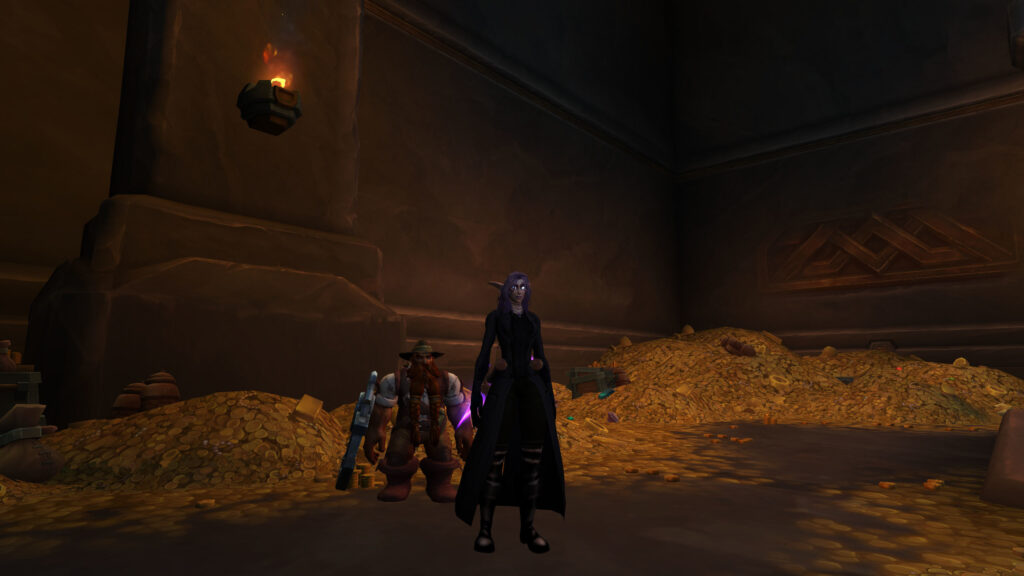
Advanced players utilize damage logs (via combat analysis tools) to review cleave efficiency. A common metric is the ratio of AoE ability hits to the total number of enemies in the pull. If a five-target pull results in an average of only 3.8 hits per AoE cast, the group has a significant positioning problem. High-performing groups aim for 4.8 or higher, indicating near-perfect geometric utilization of all their area damage spells.
This metric confirms that geometry awareness is not theoretical; it is directly quantifiable in lost damage and time.
Conclusion
In the lightning-fast environment of Legion Remix Mythic+, success on trash pulls is determined not by raw damage numbers alone, but by the intelligence of the group’s positioning. Dungeon Trash Geometry Awareness is the spatial discipline that ensures every tick of AoE damage is utilized efficiently, transforming chaotic pulls into controlled, maximum-cleave coverage opportunities. Mastering the art of the stack, the crescent, and the timely LOS pull will lead directly to faster clear times, higher success rates, and the feeling of truly maximizing your temporary Infinite Power.